
On the show this week, Tony and I opened The Hot List and listened to songs about A-listers. Songs about celebrities have existed for around a century; essentially since the birth of celebrity culture. This week we explored some notable names who have found themselves the subjects of songs…
Cole Porter & Minnie Riperton
You’re The Top was written by Cole Porter was used in the 1934 musical Anything Goes. The original book was written by Guy Bolton and P.G. Wodehouse, and was later revised considerably by Howard Lindsay and Russel Crouse. The story concerns the madcap antics about an ocean liner from New York bound for London, and follows stowaway Billy Crocker who is in love with the heiress Hope Harcourt, who is already engaged to Lord Evelyn Oakleigh. The song is sung by Crocker and Harcourt, who take turns complementing each other while denigrating themselves. The lyrics of the song list the namers of numerous ‘celebrities’, including William Shakespeare, Mickey Mouse, Mahatma Gandhi, Greta Garbo, Fred Astaire, Eugene O’Neill, Dante Alighieri, Jimmy Durante, Lady Astor, and more. The best-selling recording of You’re The Top (to date) was made by Paul Whiteman in 1934.
Lovin’ You was recorded by Minnie Riperton in 1974 for her second studio album Perfect Angel. The song was written by Riperton and her husband Richard Rudolph, and was produced by Rudolph and Stevie Wonder (who was signed to a different record label, and so was originally credited under the pseudonym “El Toro Negro”). Lovin’ You was released as the album’s third single on November 29th 1974, and peaked at number one on the US Billboard Hot 100, as well as number two on the UK Singles chart. At the end of the song, Riperton repeatedly sings “Maya”; this is a call to her daughter Maya Rudolph, who is now known for her work as an actor and comedian. According to the liner notes, the vocal melody in Lovin’ You was originally a song that Riperton sang for Maya to get her to sleep.
Joni Mitchell & Elton John
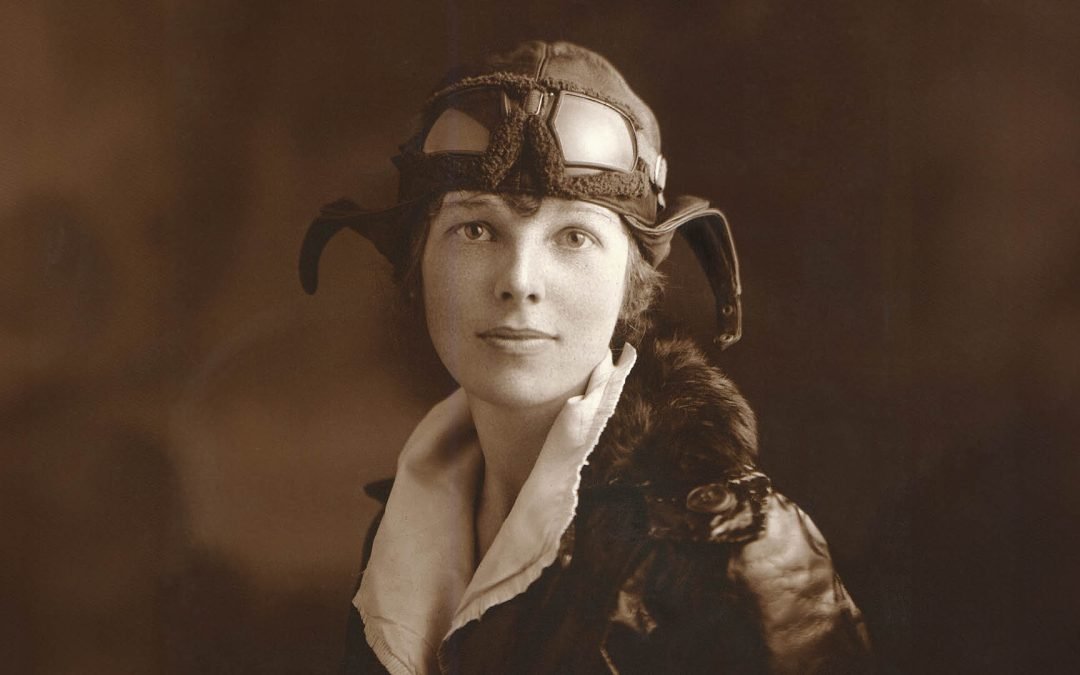
Amelia Earhart was an American aviator, and the first woman to fly solo across the Atlantic Ocean. She became a global symbol of independence, before she tragically disappeared during an attempted circumnagivation of the globe. Joni Mitchell‘s song Amelia is written as a dialogue between the singer and Earhart. Mitchell draws a parallel between her own wanderlust and Earhart‘s life, and the song becomes a meditation on freedom, solitude, and the cost of rootlessness. Amelia is from Mitchell‘s eighth studio album Hejira (1976), which was written during a period of frequent travel in 1975. The title is an unusual transliteration of an Arabic word more commonly rendered as hijrah or Hegira which means “departure” or “exodus”, and refers to the migration of the Islamic prophet Muhammad and his companions from Mecca to Medina in 622. Amelia is built around a roughly 23-bar harmonic loop, and cycles between 4/4 and 3/4 time signatures. Mitchell uses a guitar in open C tuning, and the tonal centre of the song shifts delicately between F major and G major.
Candle In The Wind was originally written in 1973 by Elton John and Bernie Taupin about actor and cultural icon Marilyn Monroe. After Princess Diana‘s sudden death in a car crash in Paris in 1997, John, a close friend of Diana‘s, adapted his original song with Taupin to record Candle In The Wind 1997 – also known as Goodbye England’s Rose. The song was produced by George Martin and released just two weeks after Diana‘s death, and it entered the UK Singles chart at number one after only one day of sales. All global proceeds from Candle In The Wind 1997 went to charities that Diana had either established or championed in her lifetime. The song was Elton John‘s fourth UK number one, and went on to become both the fastest-selling and the best-selling single in UK chart history. It is also the best-selling single in Billboard history. It won the Grammy Award for Best Male Pop Vocal Performance at the 40th Grammy Awards ceremony in 1998, and remains either the best-selling or the second best-selling single of all time worldwide. The confusion and debate is due to lack of information on sales for Bing Crosby‘s 1942 recording of White Christmas, as Crosby’s recording was released before the advent of the modern-day US and UK singles charts.
Amy Winehouse & Vulfpeck
Me and Mr. Jones was released on Amy Winehouse‘s second and final studio album Back To Black. The song was written by Winehouse about her relationship with Nasir Jones, who is better as the award-winning and genre-defining American rapper Nas. The two nmet in the early 2000s thanks to their mutual producer Salaam Remi, and remained close until Winehouse‘s death in 2011. The song features Sharon Jones‘ band The Dap Kings (featured in our “Breakthrough” show), and its title alludes to the 1972 song Me and Mrs. Jones written by Kenny Gamble, Leon Huff, and Cary Gilbert, and originally recorded by Billy Paul.
1 for 1, DiMaggio was written and recorded in 2016 by American funk band Vulfpeck for their second album The Beautiful Game. Vulfpeck were formed at the University of Michigan School of Music, Theatre & Dance, and have released six studio albums, four extended plays, a compilation, and two live albums through their own record label. They gained recognition in 2014 for releasing Sleepify, a silent album that exposed a loophole in Spotify’s royalty distribution and funded an admission-free tour. Vulfpeck were also one of the first bands to sell out Madison Square Garden without a manager or a backing label. 1 for 1, DiMaggio was written and produced by Jack Stratton, and is thematically centred in baseball culture – specifically American center fielder Joe DiMaggio. DiMaggio played his entire 13-year career in Major League Baseball for the New York Yankees, and has been namechecked in a number of songs across the years, including: Joltin’ Joe DiMaggio by Betty Bonney and Les Brown (1941); Mrs. Robinson by Simon & Garfunkel (1968) – Paul Simon performed the song on Joe DiMaggio Day in the Yankee Stadium a month after DiMaggio died; We Didn’t Start The Fire by Billy Joel (1989); and Vogue by Madonna (1990).
The Big Beat
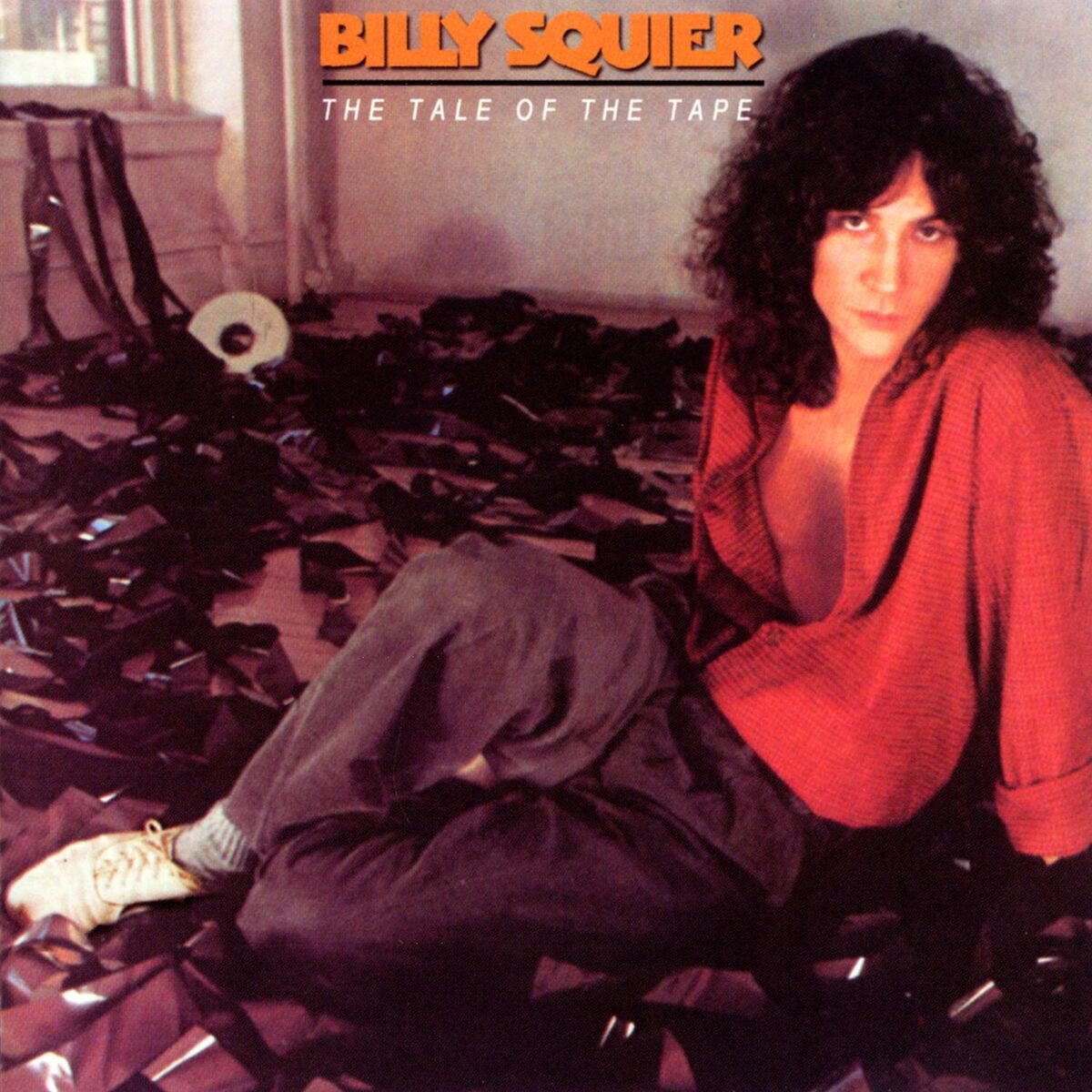
Our soundslike this week looked at the sample history of Billy Squire‘s 1980 single The Big Beat, which failed to chart upon release but has since been sampled in over 300 recordings, including: Here We Go – Live at the Funhouse, NYC – 1984 by Run-D.M.C. (1984), 99 Problems by Jay Z (2003), Fix Up Look Sharp by Dizzee Rascal (2003), and Girl On Fire by Alicia Keys (2012).
Celebrities Quiz
For our quiz this week, you heard famous songs about famous people played backwards – guess the artist and song!
As always, find the show and blog at joebennett.net/5live, with occasional Instagram extras at @joebennettmusicology. With a new show comes a new Spotify mega-playlist, which contains all songs featured on the show:
And you can still listen to our old mega-playlist here.
- Words: Joe Bennett, John Pierce O’Reilly
- Audio production: Joe Bennett, Rafi Waters
Recent Comments